Mountaineering

Mountaineering is the sport, hobby or profession of walking, hiking, trekking and climbing up mountains. It is also sometimes known as alpinism, particularly in Europe. While it began as an all-out attempt to reach the highest point of unclimbed mountains, it has branched into specializations addressing different aspects of mountains and may now be said to consist of three aspects: rock-craft, snow-craft and skiing, depending on whether the route chosen is over rock, snow or ice. All require great athletic and technical ability, and experience is also very important.

Technique

Climbers descending a ridge.

Climbers descending a ridge.

Snow

While certain compacted snow conditions allow mountaineers to progress on foot, typically some form of mechanical device is required to travel efficiently over snow and ice. Crampons are devices having 10-12 spikes that are attached to a mountaineer's boots, are used on hard snow (neve) and ice to provide additional traction and allow very steep ascents and descents. There are many different varieties, ranging from lightweight aluminum models intended for walking on glaciers to aggressive steel models intended for vertical and overhanging ice and rock. Snowshoes can be used to walk through deep snow approaching the mountain or on lesser slopes up the mountain. Skis can be used almost everywhere snowshoes can and also in steeper, more alpine landscapes although it takes more practice to develop sufficiently strong skiing skills for difficult terrain. The practice of combining the techniques of alpine skiing and mountaineering to ascend and descend a mountain is a form of the sport by itself, called Ski Mountaineering. Ascending and descending a snow slope safely requires the use of an ice axe and many different footwork techniques that have been developed over the last hundred years, originating in Europe. The progression of footwork from the lowest angle slopes to the steepest terrain is first to splay the feet to a rising traverse, to kick stepping, to front pointing the crampons. The progression of the ice axe technique from the lowest angle slopes to the steepest terrain is to use the ice axe first as a walking stick, then a stake, then to use the front pick as a dagger below the shoulders or above, and finally to swing the pick into the slope over the head. This also involves different designs of ice axe depending on the terrain to be covered, and even whether a mountaineer uses one or two ice axes.


Glaciers

When traveling over glaciers, crevasses pose a grave danger. These giant cracks in the ice are not always visible as snow can be blown and freeze over the top to make a snowbridge. At times snowbridges can be as thin as a few inches. Climbers use a system of ropes to protect themselves from such hazards. Basic gear for glacier travel includes crampons and ice axes. Teams of two to five climbers tie into a rope equally spaced. If a climber begins to fall the other members of the team perform a self-arrest to stop the fall. The other members of the team enact a crevasse rescue to pull the fallen climber from the crevasse.

Ice

Multiple methods are used to safely travel over ice. If the terrain is steep but not vertical, then protection in the form of pickets or ice screws can be driven into the snow or ice and attached to the rope by the lead climber. Each climber on the team must clip past the anchor, and the last climber picks up the picket. This allows for safety should the entire team be taken off their feet. This technique is known as Simul-climbing.

If the terrain becomes vertical then standard ice climbing techniques are used.
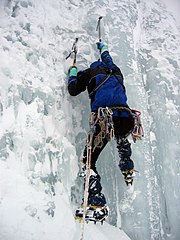
Ice climbing

Ice climbing

Shelter

“Basecamp” redirects here. For the online project manager, see Basecamp (software).

Climbers use a few different forms of shelter depending on the situation and conditions. Shelter is a very important aspect of safety for the climber as the weather in the mountains is very unpredictable. Tall mountains require many days of camping on the mountain.

Base Camp

The 'Base Camp' of a mountain is an area used for staging an attempt at the summit. Base camps are positioned to be safe from the harsher conditions above. There are base camps on many popular or dangerous summits. Mountains where the summit cannot be reached from base camp in a single day will have additional camps above base camp. For example, the southeast ridge route on Mount Everest has Base Camp plus (normally) camps I through IV.

Hut

The European alpine regions, in particular, have a network of mountain huts (called ‘refuges’ in France, ‘cabanes’ in Switzerland and ‘hytte’ in Norway). Such huts exist at many different heights, including in the high mountains themselves – in extremely remote areas bivouac shelters may have been provided. The mountain huts are of varying size and quality but each is typically centred on a communal dining room and have dormitories equipped with mattresses, blankets or duvets, and pillows – guests are expected to bring and to use their own sleeping bag liner. The facilities are usually rudimentary but, given their locations, huts offer vital shelter, make routes more widely accessible (by allowing journeys to be broken and reducing the weight of equipment needing to be carried), and offer good value. In Europe, all huts are staffed during the summer (mid-June to mid-September) and some are staffed in the spring (mid-March to mid-May). Elsewhere, huts may also be open in the fall. Huts also may have a part that is always open, but unmanned, a so-called winter hut. When open and manned, the huts are generally run by full-time employees, but some are staffed on a voluntary basis by members of Alpine clubs (such as Swiss Alpine Club and Club alpin français). The manager of the hut, termed a guardian or warden in Europe, will usually also sell refreshments and meals – both to those visiting only for the day and to those staying overnight. The offering is surprisingly wide – given that most supplies, often including fresh water, must be flown in by helicopter – and may include glucose-based snacks (such as Mars and Snickers bars) on which climbers and walkers wish to stock up, cakes and pastries made at the hut, a variety of hot and cold drinks (including beer and wine), and high carbohydrate dinners in the evenings. Not all huts do offer a catered service, though, and visitors may need to provide for themselves. Some huts offer facilities for both, enabling visitors wishing to keep costs down to bring their own food and cooking equipment and to cater using the facilities provided. Booking for overnight stays at huts is deemed obligatory, and in many cases is essential as some popular huts – even with over 100 bed spaces - may well be full during good weather and at weekends. Once made, the cancellation of a reservation should be advised to the hut as a matter of courtesy – and, indeed, potentially of safety, as many huts keep a record of where climbers and walkers state they planned to walk to next. Most huts are contactable by telephone and most take credit cards as a means of payment for the service they provide.


Bivy

A bivy or bivouac is simply getting a sleeping bag and Bivouac sack and lying down to sleep. Many times small partially sheltered areas such as cracks in rocks or a trench dug in the snow are used to provide a basic means of shelter. These techniques were originally used only in cases of emergency; however some climbers steadfastly committed to Alpine Style climbing plan on bivying in order to save the weight of a tent when snow conditions are not suitable for a snow cave.

Tent

Tents are the most common form of shelter used on the mountain. A four-season tent is recommended for any camp above timberline and in exposed positions breakwinds of snow or rock may be required to shelter the tent from these forces. One of the downsides to tenting is that high storm winds and snow loads can be dangerous and may ultimately lead to the tent's failure and collapse. In addition, the constant flapping of the tent fabric can hinder sleep and raise doubts about the security of the shelter.

Snow cave

Where conditions permit snow caves are another way to shelter high on the mountain. Some climbers do not use tents at high altitudes unless the snow conditions do not allow for snow caving since snow caves are silent and actually warmer than tents, and can be built relatively easily using a snow shovel. A correctly made snow cave will hover around freezing, which relative to outside temperatures can be very warm. They can be dug anywhere there is at least four feet of snow. Another shelter that works well is a quinzee, which is excavated from a pile of snow that has been work hardened or sintered (typically by stomping). Igloos are used by some climbers, but are deceptively difficult to build and require specific snow conditions.


Hazards

The craft of climbing has been developed to avoid three main types of danger: the danger of things falling on the climber (objective danger), the danger of the climber falling and inclement weather. The things that may fall include rocks, ice, snow, other climbers or their gear; the mountaineer may fall from rocks, ice or snow, or into a crevasse. In all, there are eight chief dangers: falling rocks, falling ice, snow-avalanches, falls, the climber falling, falls from ice slopes, falls down snow slopes, falls into crevasses and dangers from weather. To select and follow a route using one's skills and experience to mitigate these dangers is to exercise the climber's craft.

Falling rocks

Rocky mountains tend to be hazardous.

Rocky mountains tend to be hazardous.

Every rock mountain is slowly disintegrating due to erosion, the process being especially rapid above the snow-line. Rock faces are constantly swept by falling stones, which are generally possible to dodge. Falling rocks tend to form furrows in a mountain face, and these furrows (couloirs) have to be ascended with caution, their sides often being safe when the middle is stoneswept. Rocks fall more frequently on some days than on others, according to the recent weather. Ice formed during the night may temporarily bind rocks to the face but warmth of the day or direct sun exposure may easily dislodge these rocks. Local experience is a valuable help on determining typical rockfall on such routes.

The direction of the dip of rock strata often determines the degree of danger on a particular face; the character of the rock must also be considered. Where stones fall frequently debris will be found below, whilst on snow slopes falling stones cut furrows visible from a great distance. In planning an ascent of a new peak mountaineers must look for such traces. When falling stones get mixed in considerable quantity with slushy snow or water a mud avalanche is formed (common in the Himalaya). It is vital to avoid camping in their possible line of fall.

Falling ice

The places where ice may fall can always be determined beforehand. It falls in the broken parts of glaciers (seracs) and from overhanging cornices formed on the crests of narrow ridges. Large icicles are often formed on steep rock faces, and these fall frequently in fine weather following cold and stormy days. They have to be avoided like falling stones. Seracs are slow in formation, and slow in arriving (by glacier motion) at a condition of unstable equilibrium. They generally fall in or just after the hottest part of the day, and their debris seldom goes far. A skillful and experienced ice-man will usually devise a safe route through a most intricate ice-fall, but such places should be avoided in the afternoon of a hot day. Hanging glaciers (i.e. glaciers perched on steep slopes) often discharge themselves over steep rock-faces, the snout breaking off at intervals. They can always be detected by their debris below. Their track should be avoided.

Falls from rocks

The skill of a rock climber is shown by one's choice of handhold and foothold, and his adhesion to those one has chosen. Much depends on a correct estimate of the firmness of the rock where weight is to be thrown upon it. Many loose rocks are quite firm enough to bear a person's weight, but experience is needed to know which can be trusted, and skill is required in transferring the weight to them without jerking. On rotten rocks the rope must be handled with special care, lest it should start loose stones on to the heads of those below. Similar care must be given to handholds and footholds, for the same reason. When a horizontal traverse has to be made across very difficult rocks, a dangerous situation may arise unless at both ends of the traverse there be firm positions. Mutual assistance on hard rocks takes all manner of forms: two, or even three, people climbing on one another's shoulders, or using an ice axe propped up by others for a foothold. The great principle is that of co-operation, all the members of the party climbing with reference to the others, and not as independent units; each when moving must know what the climber in front and the one behind are doing. After bad weather steep rocks are often found covered with a veneer of ice (verglas), which may even render them inaccessible. Crampons are useful on such occasions.

Avalanches

The avalanche is the most underestimated danger in the mountains. People generally think that they will be able to recognize the hazards and survive being caught. The truth is a somewhat different story. Every year, 120 - 150 people die in small avalanches in the Alps alone. The vast majority are reasonably experienced male skiers aged 20-35 but also include ski instructors and guides.[citation needed] There is always a lot of pressure to risk a snow crossing. Turning back takes a lot of extra time and effort, supreme leadership, and most importantly there seldom is an avalanche to prove the right decision was made. Making the decision to turn around is especially hard if others are crossing the slope, but any next person could become the trigger.

There are many types of avalanche, but two types are of the most concern:

  1. Slab avalanche
    This type of avalanche occurs when a plate of snow breaks loose and starts sliding down; these are the largest and most dangerous.
    1. Hard slab avalanche
    This type of avalanche is formed by hard-packed snow in a cohesive slab. The slab will not break up easily as it slides down the hill, resulting in large blocks tumbling down the mountain.
    1. Soft slab avalanche
    This type of avalanche is formed again by a cohesive layer of snow bonded together, the slab tends to break up more easily.
  2. Loose snow avalanche
    This type of avalanche is triggered by a small amount of moving snow that accumulates into a big slide. Also known as a "wet slide or point release" avalanche. This type of avalanche is deceptively dangerous as it can still knock a climber or skier off their feet and bury them, or sweep them over a cliff into a terrain trap.

Dangerous slides are most likely to occur on the same slopes preferred by many skiers: long and wide open, few trees or large rocks, 30 to 45 degrees of angle, large load of fresh snow, soon after a big storm, on a slope 'lee to the storm'. Solar radiation can trigger slides as well. These will typically be a point release or wet slough type of avalanche. The added weight of the wet slide can trigger a slab avalanche. Ninety percent of reported victims are caught in avalanches triggered by themselves or others in their group.

When going off-piste or traveling in alpine terrain, parties are advised to always carry:

  1. avalanche beacon
  2. probe
  3. shovel (retrieving victims with a shovel instead of your hands is five times faster)

and to have had avalanche training! Paradoxically, expert skiers who have avalanche training make up a large percentage of avalanche fatalities; perhaps because they are the ones more likely to ski in areas prone to avalanches, and certainly because most people do not practice enough with their equipment to be truly fast and efficient rescuers.

Even with proper rescue equipment and training, there is a one-in-five chance of dying if caught in a significant avalanche, and only a 50/50 chance of being found alive if buried more than a few minutes. The best solution is to learn how to avoid risky conditions.

Ice slopes

Mountaineers descending mixed rock, snow and ice slope in winter High Tatras.

Mountaineers descending mixed rock, snow and ice slope in winter High Tatras.

For travel on slopes consisting of ice or hard snow, crampons are a standard part of a mountaineer's equipment. While step-cutting can sometimes be used on snow slopes of moderate angle, this can be a slow and tiring process, which does not provide the higher security of crampons. However, in soft snow or powder, crampons are easily hampered by balling of snow, which reduces their effectiveness. In either case, an ice axe not only assists with balance but provides the climber with the possibility of self-arrest in case of a slip or fall. On a true ice slope however, an ice axe is rarely able to effect a self-arrest. As an additional safety precaution on steep ice slopes, the climbing rope is attached to ice screws buried into the ice.

True ice slopes are rare in Europe, though common in mountains located in the tropics, where newly-fallen snow quickly thaws on the surface and becomes sodden below, so that the next night's frost turns the whole mass into a sheet of semi-solid ice.

Snow slopes

Part of the Haute Route on French, Swiss border; two alpinists can be seen following the trail in the snow.

Part of the Haute Route on French, Swiss border; two alpinists can be seen following the trail in the snow.

Snow slopes are very common, and usually easy to ascend. At the foot of a snow or ice slope is generally a big crevasse, called a bergschrund, where the final slope of the mountain rises from a snow-field or glacier. Such bergschrunds are generally too wide to be stepped across, and must be crossed by a snow bridge, which needs careful testing and a painstaking use of the rope. A steep snow slope in bad condition may be dangerous, as the whole body of snow may start as an avalanche. Such slopes are less dangerous if ascended directly, rather than obliquely, for an oblique or horizontal track cuts them across and facilitates movement of the mass. New snow lying on ice is especially dangerous. Experience is needed for deciding on the advisability of advancing over snow in doubtful condition. Snow on rocks is usually rotten unless it is thick; snow on snow is likely to be sound. A day or two of fine weather will usually bring new snow into sound condition. Snow cannot lie at a very steep angle, though it often deceives the eye as to its slope. Snow slopes seldom exceed 40°. Ice slopes may be much steeper. Snow slopes in early morning are usually hard and safe, but the same in the afternoon are quite soft and possibly dangerous; hence the advantage of an early start.

Crevasses

Crevasses are the slits or deep chasms formed in the substance of a glacier as it passes over an uneven bed. They may be open or hidden. In the lower part of a glacier the crevasses are open. Above the snow-line they are frequently hidden by arched-over accumulations of winter snow. The detection of hidden crevasses requires care and experience. After a fresh fall of snow they can only be detected by sounding with the pole of the ice axe, or by looking to right and left where the open extension of a partially hidden crevasse may be obvious. The safeguard against accident is the rope, and no one should ever cross a snow-covered glacier unless roped to one, or even better to two companions. Anyone venturing onto crevasses should be trained in crevasse rescue.

Weather

The primary dangers caused by bad weather centre around the changes it causes in snow and rock conditions, making movement suddenly much more arduous and hazardous than under normal circumstances.

Poor visibility in blizzard conditions.

Poor visibility in blizzard conditions.

Whiteouts make it difficult to retrace a route while rain may prevent taking the easiest line only determined as such under dry conditions. In a storm the mountaineer who uses a compass for guidance has a great advantage over a merely empirical observer. In large snow-fields it is, of course, easier to go wrong than on rocks, but intelligence and experience are the best guides in safely navigating objective hazards.

Summer thunderstorms may produce intense lightning. If a climber happens to be standing on or near the summit, they risk being struck. There are many cases where people have been struck by lightning while climbing mountains. In most mountainous regions, local storms develop by late morning and early afternoon. Many climbers will get an "alpine start"; that is before or by first light so as to be on the way down when storms are intensifying in activity and lightning and other weather hazards are a distinct threat to safety.

Altitude

Rapid ascent can lead to altitude sickness. The best treatment is to descend immediately. The climber's motto at high altitude is "climb high, sleep low", referring to the regimen of climbing higher to acclimatize but returning to lower elevation to sleep. In the South American Andes, the chewing of coca leaves has been traditionally used to treat altitude sickness symptoms.

Common symptoms of altitude sickness include severe headache, sleep problems, nausea, lack of appetite, lethargy and body ache. Mountain sickness may progress to HACE (High Altitude Cerebral Edema) and HAPE (High Altitude Pulmonary Edema), both of which can be fatal within 24 hours.

In high mountains, atmospheric pressure is lower and this means that less oxygen is available to breathe. This is the underlying cause of altitude sickness. Everyone needs to acclimatize, even exceptional mountaineers that have been to high altitude before. Generally speaking, mountaineers start using bottled oxygen when they climb above 7,000 m. Exceptional mountaineers have climbed 8000-metre peaks (including Everest) without oxygen, almost always with a carefully planned program of acclimatization.

In 2005, researcher and mountaineer John Semple established that above-average ozone concentrations on the Tibetan plateau may pose an additional risk to climbers.[1]

Locations

Mountaineering has become a popular sport throughout the world. In Europe the sport largely originated in the Alps, and is still immensely popular there. Other notable mountain ranges frequented by climbers include the Caucasus, the Pyrenees, Rila Mountain and the Tatra mountains. In North America climbers frequent the Rockies and Sierra Nevada of California, the Cascades of Washington and the high peaks of Alaska. There has been a long tradition of climbers going on expeditions to the Greater Ranges, a term generally used for the Andes and the high peaks of Asia including the Himalaya, Pamirs and Tien Shan. In the past this was often on exploratory trips or to make first ascents. With the advent of cheaper long-haul air travel mountaineering holidays in the Greater Ranges are now undertaken much more frequently and ascents of even Everest and Vinson Massif (the highest mountain in Antarctica) are offered as a "package holiday". Other popular mountaineering areas of more local interest include the Southern Alps of New Zealand, the Japanese Alps the Scottish Highlands and the mountains of Scandinavia, especially Norway.

CANYONING IN TURKEY

This tour offers different features since it covers many other activities besides canyoning such as seaside touring, swimming in the sea and boat trip. This tour offers also another beauty coming from natural features of Butterfly Valley. The valley takes its name from endemic Jessey Tiger Butterflies which only live in this region and on Rhodes Island in the world. They live in the wet and cool zone where we walk down inside the valley. It is possible to view hundreds of butterflies depending on the season.

An unforgettable experience and an extreme adventure;

Abseiling for up to 60 meters! We will start in Faralya village after a 20 minutes bus ride from Ölüdeniz. At 300 meters above sea level, we will pick the most suitable abseiling point among 4 choices depending on the condition of the waterfall. Depending on the season, you will be accompanied by thousands of rare butterflies. Once we reach the canyon, we will walk to the beach of Butterfly Valley in order to enjoy swimming. After a short break, we will return to Ölüdeniz by boat.

For this adventure, you should be sporty minded.

No foreknowledge required. From 16 years on!

We Provide:
World standard canyoning equipment (high worth rope, carbines, harness, figure-eight, wet suit, helmet, etc), snacks, soft drinks, insurance, transfers.

You Bring:
Swimming dress, shoes to get wet, towels, waterproof camera.

Our guides are responsible and put safety at first, kept up with the newest techniques, internationally experienced and are multilingual professionals with absolute team sprit.

Canyoning

Canyoning (known as canyoneering in the U.S.) is traveling in canyons using a variety of techniques that may include walking, scrambling, climbing, jumping, abseiling, and/or swimming.


Although hiking down a canyon that is non-technical (canyon hiking) is often referred to as canyoneering, the terms canyoning and canyoneering are more often associated with technical descents — those that require rappels (abseils) and ropework, technical climbing or down-climbing, technical jumps, and/or technical swims.

Canyoning is frequently done in remote and rugged settings and often requires navigational, route-finding and other wilderness travel skills.

Canyons that are ideal for canyoning are often cut into the bedrock stone, forming narrow gorges with numerous drops, beautifully sculpted walls, and sometimes spectacular waterfalls. Most canyons are cut into limestone, sandstone, granite or basalt, though other rock types are found. Canyons can be very easy or extremely difficult, though emphasis in the sport is usually on aesthetics and fun rather than pure difficulty. A wide variety of canyoning routes are found throughout the world, and canyoning is enjoyed by people of all ages and skill levels.

Canyoning gear includes climbing hardware, static ropes, helmets, wetsuits, and specially designed shoes, packs, and rope bags. While canyoners have used and adapted climbing, hiking, and river running gear for years, more and more specialized gear is invented and manufactured as canyoning popularity increases.

Canyoning around the world

Mystery Canyon, Zion National Park

Mystery Canyon, Zion National Park
Canyoning in the Rocky Mountains

Canyoning in the Rocky Mountains
Canyoning via packraft in the U.S. southwest deserts.

Canyoning via packraft in the U.S. southwest deserts.

In most parts of the world canyoning is done in mountain canyons with flowing water. Countries with established canyoning include: Portugal, Australia, New Zealand, Spain, France, Italy, Switzerland, Germany, Austria, Reunion Island, Greece (Crete), Jordan, Canada, Mexico, Costa Rica, Brazil, Ecuador, Japan, Croatia, Turkey, Israel, Mauritius and the United States. Many canyons in South Africa require jumping or scrambling which is called Kloofing. Even in Hong Kong, where there are numerous stream gorges, a similar activity called stream or river trekking is popular. In Japan and Taiwan it's called river tracing and typically involves traveling upstream.

In the United States, descending mountain canyons with flowing water is sometimes referred to as canyoning, although the term "canyoneering" is more common. Most canyoneering in the United States occurs in the many slot canyons carved in the sandstone found throughout the Colorado Plateau. Outside of the Colorado Plateau, numerous canyoneering opportunities are found in the San Gabriel, Sierra Nevada, Cascade, and Rocky Mountain ranges.

Hazards

Canyoning can be dangerous. Escape out the sides of a canyon is often impossible, and completion of the descent is the only possibility. Due to the remoteness and inaccessibility of many canyons, rescue can be impossible for several hours or several days.

High water flow / hydraulics

Canyons with significant water flow may be treacherous and require special ropework techniques for safe travel. Hydraulics, undercurrents, and sieves (or strainers) occur in flowing canyons and can trap or pin and drown a canyoner. A 1993 accident in Zion National Park, Utah, USA, in which two leaders of a youth group drowned in powerful canyon hydraulics (and the lawsuit which followed) brought notoriety to the sport.[1]

Flash floods

A potential danger of many canyoning trips is a flash flood. A canyon "flashes" when a large amount of precipitation falls in the drainage, and water levels in the canyon rise quickly as the runoff rushes down the canyon. In canyons that drain large areas, the rainfall could be many kilometers away from the canyoners, completely unbeknown to them. A calm or even dry canyon can quickly become a violent torrent due to a severe thunderstorm in the vicinity. [2] Fatalities have occurred as a result of flash floods; in one widely-publicized 1999 incident, 21 tourists on a commercial canyoning adventure trip drowned in Saxetenbach Gorge, Switzerland.

Hypothermia and hyperthermia

Temperature related illnesses are also canyoning hazards. In arid desert canyons, heat exhaustion can occur if proper hydration levels are not maintained and adequate steps are not taken to avoid the intense rays of the sun. Hypothermia can be a serious danger in any canyon that contains water, during anytime of the year. Wetsuits and drysuits can mitigate this danger to a large degree, but when people miscalculate the amount of water protection they will need, dangerous and sometimes fatal situations can occur.[3] Hypothermia due to inadequate cold water protection is cited as a cause of a 2005 incident in which two college students drowned in a remote Utah canyon.[4]

Keeper potholes

Some canyoneering, especially in sandstone slots, involves escaping from large potholes. Also called "keeper potholes," these features, carved out by falling water at the bottom of a drop in the watercourse, are circular pits that often contain water that is too deep to stand up in and whose walls are too smooth to easily climb out of. Canyoneers use several unique and creative devices to escape potholes, including hooks used for aid climbing attached to long poles and specialized weighted bags that are attached to ropes and tossed over the lip of a pothole.

Very narrow slots

Narrow slot canyons, especially those narrower than humans, present difficult obstacles for canyoners. At times a canyoner is forced to climb up (using chimneying or off-width climbing techniques) to a height where one can comfortably maneuver laterally with pressure on both walls of the canyon. This tends to be strenuous and can require climbing high above the canyon floor, unprotected, for long periods of time. Failure to complete the required moves could result in being trapped in a canyon where rescue is extremely difficult.

Narrow sandstone slot canyons tend to have abrasive walls which act as sandpaper as a canyoner moves or slides along them. This abrasion tends to rip clothing and gear, and can cause painful skin abrasion

Turkey Travel Guide for backpackers

Turkey Travel Guide for backpackers

This is one of the most interesting countries on the globe, with oriental charm but a definite hold on the modern interests. Although the spectacular mosques and old world castles remind of it?s history and bring in the tourists, there are other great attractions in this country of diversity and adventure. Try the river rafting, or mountain climbing, or any number of sporting activities, as well as checking out the time honored and famous traditions such as watching belly-dancing, buying wonderful carpets, and doing some serious souvenir hunting.


Antalya ? Set on Turkey's central Mediterranean coast, Antalya has a historic centre of Roman-Ottoman heritage. Apart from it?s own attractions, it is also a prime spot to set up base to explore the surrounding country and villages.

Bodrum ? with palm trees lining the streets, white villas adorning the hillside, and its beautiful harbour, Bodrum is without doubt the most attractive South Aegean resort. Adding to its charm are great water sports and booming discos (or not) for the perennially energetic.

Ephesus ? This is the place to see just how grand things were when Ephesus was known as Ionia during the Greek Empire?s heyday, with the ruins of the classical city being among the best preserved in Turkey.

Istanbul ? Istanbul is one of those places where you stand back and stare at its skyline and words fail you. Straight out of a fairytale of magic carpets and romantic heroes, it is studded with magnificent minarets and domes that date back to Byzantium times. Apart from its ancient beauty, Istanbul is the cultural and entertainment capital of Turkey.

Harran ? This place is so ancient, and people have lived here for so long, that the belief that Abraham once resided here seems borne out in the crumbling walls and ruins on the hills surrounding the town.

The climate on the Aegean and Mediterranean coasts is at its best in Spring (April to June) and Autumn (September to November) but summer brings with it an unbearable heat, whereas Eastern Turkey is at its best over June to September.

In September, Istanbul shows the world its fashion flair with its biannual international fashion fair, and Diyarbakir's holds its annual Watermelon Festival. June sees the International Istanbul Music Festival in Istanbul, an event that has made it one of world?s greatest festival cities.

Backpacking (wilderness)

Jump to: navigation, search
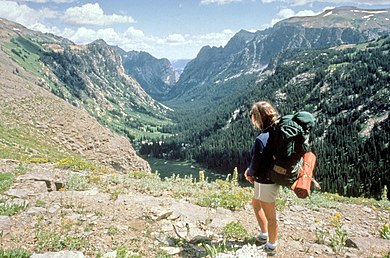
Backpacking in the Grand Teton National Park, United States

Backpacking in the Grand Teton National Park, United States

Backpacking (US; tramping, trekking, or bushwalking in other countries) combines hiking and camping in a single trip. A backpacker hikes into the backcountry to spend one or more nights there, and carries supplies and equipment to satisfy sleeping and eating needs.

Definition

Varsity Scouts of the Boy Scouts of America preparing to hit the trail

Varsity Scouts of the Boy Scouts of America preparing to hit the trail

A backpacker packs all of his or her gear into a backpack. This gear must include food, water, and shelter, or the means to obtain them, but very little else, and often in a more compact and simpler form than one would use for stationary camping. A backpacking trip must include at least one overnight stay in the wilderness (otherwise it is a day hike). Many backpacking trips last just a weekend (one or two nights), but long-distance expeditions may last weeks or months, sometimes aided by planned food and supply drops.

Backpacking camps are more spartan than ordinary camps. In areas that experience a regular traffic of backpackers, a hike-in camp might have a fire ring and a small wooden bulletin board with a map and some warning or information signs. Many hike-in camps are no more than level patches of ground without scrub or underbrush. In very remote areas, established camps do not exist at all, and travelers must choose appropriate camps themselves.

In some places, backpackers have access to lodging that are more substantial than a tent. In the more remote parts of Great Britain, bothies exist to provide simple (free) accommodation for backpackers. Another example is the High Sierra Camps in Yosemite National Park. Mountain huts provide similar accommodation in other countries, so being a member of a mountain hut organization is advantageous (perhaps required) to make use of their facilities. On other trails (e.g. the Appalachian Trail) there are somewhat more established shelters of a sort that offer a place for weary hikers to spend the night without needing to set up a tent.

Most backpackers purposely try to avoid impacting on the land through which they travel. This includes following established trails as much as possible, not removing anything, and not leaving residue in the backcountry. The Leave No Trace movement offers a set of guidelines for low-impact backpacking ("Leave nothing but footprints. Take nothing but photos. Kill nothing but time. Leave nothing but memories").

Professional backpacking

For some people, backpacking is a necessary and integral part of their job.

In the US military a framed backpack is referred to as a "rucksack" or simply a "ruck". Soldiers who serve in the militaries of most nation-states usually receive at least some rudimentary backpacking training while infantrymen are often trained to a more advanced backpacking skill level. They share many common attributes with amateur backpackers: being self-contained, use of land-navigation skills and actively minimizing their environmental foot-print. There are, however, a few differences -- such as the need to carry weapons, ammunition, and communication equipment, and sometimes the need to maintain "noise and light discipline", which means remaining silent and in darkness to avoid detection.

Other professional backpackers may be scientific and academic researchers, professional guides, photographers, park-rangers and "search & rescue" personnel.

Motivation

Hikers backpacking through Stein Valley Provincial Park in British Columbia.

Hikers backpacking through Stein Valley Provincial Park in British Columbia.

People are drawn to backpacking primarily for recreation, to explore places that they consider beautiful and fascinating, many of which cannot be accessed in any other way. A backpacker can travel deeper into remote areas, away from people and their effects, than a day-hiker can. However, backpacking presents more advantages besides distance of travel. Many weekend trips cover routes that could be hiked in a single day, but people choose to backpack them anyway, for the experience of staying overnight.

These possibilities come with disadvantages. The weight of a pack, laden with supplies and gear, forces backpackers to travel more slowly than day-hikers would, and it can become a nuisance and a distraction from enjoying the scenery. In addition, camp chores (such as pitching camp, breaking camp, and cooking) can easily consume several hours every day. However, with practice, much of this "0 time" can be purged from the day.

Backpackers face many risks, including adverse weather, difficult terrain, treacherous river crossings, and hungry or unpredictable animals (although the perceived danger from wild animals usually greatly exceeds the true risk). They are subject to illnesses, which run the gamut from simple dehydration to heat exhaustion, hypothermia, altitude sickness, and physical injury. The remoteness of backpacking locations exacerbates any mishap. However, these hazards do not deter backpackers who are properly prepared. Some simply accept danger as a risk that they must endure if they want to backpack; for others, the potential dangers actually enhance the allure of the wilderness.

Equipment

A small backpacking tent, for two people ("two-man")

A small backpacking tent, for two people ("two-man")

Almost all backpackers seek to minimize the weight and bulk of gear carried. A lighter pack causes less fatigue, injury and soreness, and allows the backpacker to travel longer distances. Every piece of equipment is evaluated for a balance of utility versus weight. Significant reductions in weight can usually be achieved with little sacrifice in equipment utility, though very lightweight equipment is usually significantly more costly.

A large industry has developed to provide lightweight gear and food for backpackers. The gear includes the backpacks themselves, as well as ordinary camping equipment modified to reduce the weight, by either reducing the size, reducing the durability, or using lighter materials such as special plastics, alloys of aluminium, titanium, composite materials, impregnated fabrics and carbon fiber. Designers of portable stoves and tents have been particularly ingenious. Homemade gear is common too, such as the beverage-can stove.

Some backpackers use lighter and more compact gear than do others. The most radical measures taken in this regard are sometimes called ultralight backpacking.

Due to the emphasis on weight reduction, a practical joke common in some circles is to secretly pack a small but relatively heavy luxury item, such as a soft drink, into another backpacker's pack. Then, once the group stops for a rest, the perpetrator retrieves the item, thanks the bearer for carrying it, and consumes it.

Water

Backpackers often carry some water from the trailhead, to drink while walking. For short trips, they may carry enough to last the whole trip, but for long trips this is not practical. A backpacker needs anywhere from 2 to 8 L (roughly 1/2 to 2 gallons) or more per day, depending on conditions, making a water supply for more than a few days prohibitively heavy.

Backpackers may carry one to four litres of water, depending on conditions and availability. Although some backpacking camps in heavily-used areas provide potable water, it must usually be obtained from lakes and streams.

According to health and medical experts, untreated water found in backcountry settings in the U.S. and Canada is generally quite safe to drink. [1] Yet despite this, many backpackers believe that drinking and cooking water nearly always needs treatment with a filter or chemical tablets to protect against bacteria and protozoa (see Potability of backcountry water and Portable water purification).

If water is unavailable, or if the only water available is irreparably filthy, backpackers may need to carry large amounts of water for long distances.

Water may be stored in bottles or in soft, collapsible hydration packs (bladders). Some backpackers store water in ordinary plastic beverage bottles, while others use special Lexan bottles or metal canteens. For accessibility they may be carried by a shoulder strap or attached to the outside of a pack. Bladders are typically made of plastic, rubber, and/or fabric. They are light, easily stored and collapsible. They may be equipped with drinking hoses for easy access while hiking. In spite of this convenience, bladders are more prone to leaking than bottles, particularly at the hose connections. Hoses also allow the hiker to lose track of the water supply in the bladder and to deplete it prematurely.

Food

A typical backcountry kitchen (however, few backpacking camps feature grills like the one shown).

A typical backcountry kitchen (however, few backpacking camps feature grills like the one shown).

For more information, see outdoor cooking.

Some backpackers enjoy cooking elaborate meals with fresh ingredients, particularly on short trips, and others carry the gear and take the time to catch fish or hunt small game for food. However, especially for long expeditions, most backpackers' food criteria are roughly the same: high energy content (particularly protein), with long shelf life and low mass and volume. An additional concern is weight; while Dutch oven and campfire cookery are historically popular, small liquid-fuel campstoves and ultralight cooking pots made of aluminum or titanium are more common in modern usage due to weight limitations and fire restrictions in many locales.

Ordinary household foods used on backpacking trips include cheese, bread, sausage, fruit, peanut butter, and pasta. Popular snack foods include trail mix, easily prepared at home; convenient and nutritious energy bars; and chocolate and other forms of candy, which provide quick energy and flavor. Traditional outdoor food includes dried foodstuffs such as jerky or pemmican, and also products like oatmeal (which can also be consumed raw in emergency situations).

Most backpackers avoid canned food, except for meats or small delicacies. Metal cans and their contents are usually heavy, and, like all trash, the empties must be carried back out.

For dinners, many hikers use specially manufactured, pre-cooked food that can be eaten hot. It is often sold in large, stiff bags that double as eating vessels. One common variety of special backpacking food is freeze-dried food, which can be quickly reconstituted by adding hot water. One can also purchase a commercial food dehydrator which removes the majority of water from a pre-cooked meal. To eat, water is mixed in with the meal several hours before eating and allowed to rehydrate before heating. Some various distributors of this are Backpackers Pantry and Mountain Outfitters. Another kind of special backpacking food is UHT-packaged without dehydration, and can be reheated with a special, water-activated chemical heater. This technology originated with the U.S. military's Meal Ready-to-Eat ("MRE"), but is now produced also for the commercial market. The small chemical heater obviates the need for a portable stove and fuel, but the meals and packaging weigh so much that, for more than a few meals, there is no weight advantage. On the other hand, MRE's were developed with many more factors than mere weight in mind, and they still make excellent backpacking food for several reasons, such as a) they do not need to be rehydrated nor heated or cooked in any manner, b) they are very durably packaged, c) a single MRE contains a full meal, complete with snack and desert, d) they offer a great deal of variety in each meal, including condiments such as Tabasco sauce, e) they are individually packaged inside the "brown plastic wrapper", so that you can place individual components in various pockets and "eat on the move". As more and more "big box" retail stores carry pre-packaged dehydrated foods (such as Mountain House Brand) however, it is becoming increasingly easier to buy packaged meals retail versus mail order, whereas MRE's are rarely carried in retail stores.

There is a genre of cookbooks specializing in trailside food and the special challenges inherent in backcountry cooking. Most such cookbooks espouse one of two philosophies; the first, generally used on short trips, involves planning out meals and preparing many ingredients in one's home kitchen before departure. The second method, bulk rationing, simply supplies the hiker with ingredients, allowing on-trail cooking with minimal prior planning, and is sometimes used for extended outings. A third form of the genre deals in Dutch oven cookery, which has considerable historical cachet (especially in countries such as the United States with a long pioneer tradition), but is dependent on suitable locations for a campfire.

Winter backpacking

Although backpacking in the winter is rewarding, it can be dangerous and generally requires more gear. Backpackers may need skis or snowshoes to traverse deep snow, or crampons to cross ice in colder climates. Cotton clothing, which absorbs moisture and chills the body, is particularly dangerous in cold weather, so backpackers stick to synthetic materials or materials that won't hold moisture. Special low-temperature sleeping bags and tents can be expensive, but will be more comfortable than many layers of warm clothing. However when hiking in cold weather it is always better to hike with varying layers of clothing so that as the body heats up layers can be taken off without causing the wearer to sweat or become very chilled.

Skills and safety

Main article: Hazards of outdoor activities
  • Survival skills are handy for peace of mind: In case the weather, terrain or environment is more challenging than prepared for, or for dealing with shortcomings in
  • Navigation and orienteering are useful to find the trailhead, then find and follow a route to a desired sequence of destinations, and then an exit. In case of disorientation, orienteering skills are important to determine where you are and formulate a route to somewhere more desirable. At their most basic, navigation skills allow you to choose the correct sequence of trails to follow.
  • First Aid: effectively dealing with minor injuries (splinters, punctures, sprains) is considered by many a fundamental backcountry skill. More subtle, but maybe even more important, is recognizing and promptly treating hypothermia, heat stroke, dehydration and hypoxia, as these are rarely encountered in daily life.
  • Leave No Trace is the backpacker's version of the golden rule: To have beautiful and pristine places to enjoy, help make them. At a minimum, don't make them worse.
  • Distress signaling is a skill of last resort.

Reasons


Foot-launched powered hang glider.

Foot-launched powered hang glider.

Some who enjoy extreme sports repudiate the stereotypical "adrenaline junkie" tag. The practitioners would claim they enjoy developing their physical and/or mental skills, seek mastery of inhospitable environments, look to escape from the mundane rigors of day-to-day existence, or simply love the wilderness environment in which many of these sports take place. Bob Drury, a paraglider pilot says, "We do these things not to escape life, but to prevent life escaping us"—even though accidents in these sports could be fatal. Many participants also don't think of their activities as either extreme or sports at all. To the most passionate purists, the sport label doesn't fit because they aren't competing to win anything. Worse, the extreme label has frequently been blamed for stereotyping participants in these activities as stupid, reckless, and even suicidal. Eric Brymer PhD (2005) also found that the potential of various extraordinary human experiences, many of which parallel those found in activities such as meditation, was an important part of the extreme sport experience.

Some of the sports have existed for decades and their proponents span generations, some going on to become well known personalities. Rock climbing and ice climbing have spawned publicly recognizable names such as Edmund Hillary, Chris Bonington, Wolfgang Gullich and more recently Joe Simpson. Another example is surfing, which was originally invented centuries ago by the native inhabitants of Hawaii.

Adrenaline rush

A feature of such activities in the view of some is their alleged capacity to induce an adrenaline rush in participants. However, the medical view is that the rush or high associated with the activity is not due to adrenaline being released as a response to fear, but due to increased levels of dopamine, endorphins and serotonin because of the high level of physical exertion. Furthermore, a recent study suggests that the link to adrenaline and 'true' extreme sports is tentative. The study defined 'true' extreme sports as a leisure or recreation activity where the most likely outcome of a mismanaged accident or mistake was death. This definition was designed to separate the marketing hype from the activity. Another characteristic of activities so labeled is they tend to be individual rather than team sports. Extreme sports can include both competitive and non-competitive activities.

Marketing

Some contend that the distinction between an extreme sport and a conventional one is as much to do with marketing as it is to do with perceptions about levels of danger involved or the amount of adrenaline generated. Furthermore a sport like rugby union, though dangerous and adrenaline-inducing, would not fall into the category of extreme sports due to its traditional image, and it does not have certain things that other extreme sports do, such as very high level of speed and an intention to perform stunts. Scuba diving is not seen as an extreme sport these days, despite the level of danger and physical exertion, because of its primarily adult demographic. Also the fact that it is not classed as a sport, as there is no objective to the activity. Another example: compare the perception of demolition derby, not usually thought of as an extreme sport, to that of BMX racing, which is. Demolition derby has an adult demographic, BMX is a youth sport.

Snowboarder drops off a cornice.

Snowboarder drops off a cornice.
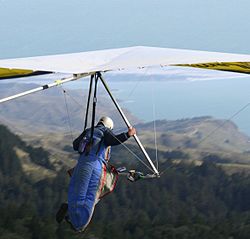
Hang glider launching from Mount Tamalpais

Hang glider launching from Mount Tamalpais

The definition of extreme sports may have shifted over the years due to marketing trends. When the term first surfaced circa the late 1980s/early 1990s, it was used for adult sports such as skydiving, scuba diving, surfing, rock climbing, snow skiing, water skiing, snowboarding, mountain biking, mountaineering, storm chasing, hang gliding, and bungee jumping, many of which were undergoing an unprecedented growth in popularity at the time. Outside magazine, not the X Games, epitomized the meaning of the term, and if there was a clothing style associated with extreme sports it was an "outdoorsy" look favoring brand names associated with mountaineering or backpacking such as The North Face and Patagonia, Teva sandals or hiking boots for footwear, etc. The term nowadays applies more to youth sports like skateboarding, snowboarding, and BMX and is closely associated with marketing efforts aimed at the younger generation (e.g. the ad campaigns of Mountain Dew), and with their favored styles of clothing and music, especially the kind of urban baggy look associated with skateboarders, and loud, fast alternative rock. This shift in styles may also be partly a generational shift, as Baby Boomers and Generation X have aged and marketing efforts associated with extreme sports shifted toward the younger Generation Y demographic sometime in the mid to late 1990s.

The term gained popularity with the advent of the X Games, a made-for-television collection of events. Advertisers were quick to recognize the appeal of the event to the public, as a consequence competitors and organizers are not wanting for sponsorship these days. The high profile of extreme sports and the culture surrounding them has also led people to invent parodies, such as Extreme ironing, urban housework, extreme croquet, and house gymnastics.

The difference between the serious extreme sports and imitation or parody is not always obviou

Overview


Ice climbing is a type of climbing.

Ice climbing is a type of climbing.

Extreme sports differ from standard sports due to the relatively higher number of inherently uncontrollable variables in extreme sports. Extreme sport athletes compete not only against other athletes, but also against environmental obstacles and challenges. These environmental variables are frequently weather and terrain related, including wind, snow, water and mountains. Because these natural phenomena cannot be controlled, they inevitably affect the outcome of the given sport or event.

In a standard sporting event, athletes compete against each other under controlled circumstances. While it is possible to create a controlled extreme sporting event, there are often variables that cannot be held constant for all athletes. Examples include snow conditions for snowboarders, rock and ice quality for climbers, and wave height for surfers.

Extreme Sports

(also called action sport and adventure sport) is a media term for certain activities perceived as having a high level of inherent danger. These actives often involve speed, height, high level of physical exertion, high specialized gear or spectacular stunts.At present date, there are no careful studies or statistics of deaths to separate activities with low or normal level of danger from those with high level of danger. Therefore is not even possible to categorize activities as extreme sports and the term is often used for the marketing.